Dubai Real Estate Market Entering a New Phase
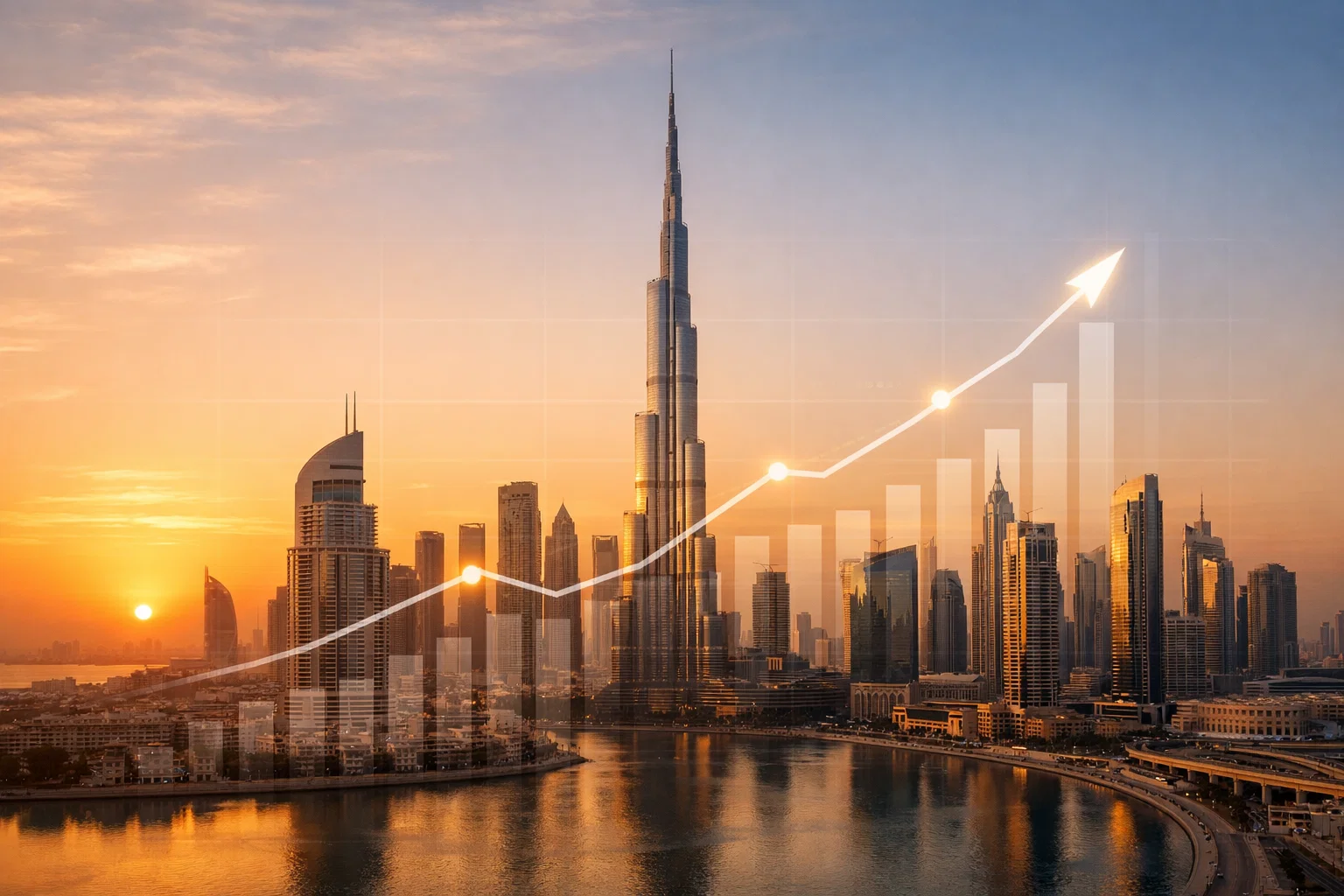
Dubai Property Price Forecast 2026: Key Trends
1. Moderate Price Growth Expected
2. Market Stabilization Instead of Boom or Crash
3. Possible Short-Term Price Corrections
4. Supply Pressure Will Shape Prices
5. Strong Demand Will Continue to Support the Market
Impact of Geopolitical Tensions on Prices
Best-Case, Base-Case, and Worst-Case Scenarios
Best Case
Base Case (Most Likely)
Worst Case
Which Areas Will Perform Best in 2026
Strong Growth Areas
Stable and Value-Driven Areas
Should You Invest Based on the 2026 Forecast?
Why Dubai Remains a Strong Investment Market
Final Verdict: What Will Happen to Dubai Property Prices in 2026?
Work With Market Experts
The Dubai property price forecast for 2026 is one of the most searched topics among investors, buyers, and global real estate watchers. After a record-breaking growth cycle between 2022 and 2025, the market is now entering a new phase defined by stability, selective corrections, and long-term opportunity. So, what can investors really expect in 2026? The answer lies in understanding both market fundamentals and the
shifting dynamics across different segments. Dubai Real Estate Market Entering a New Phase Dubai’s property market enters 2026 from a position of strength, supported by several major indicators from the previous year. Key factors include: Record transaction volumes in 2025 Significant price growth across residential segments Strong international investor demand Continued confidence in Dubai as a global investment destination However, the market is no longer
in a hyper-growth phase. Instead, it is transitioning into a more balanced and mature cycle, where strategic buying becomes even more important. Dubai Property Price Forecast 2026: Key Trends 1. Moderate Price Growth Expected Most forecasts suggest that property prices in Dubai will continue to rise in 2026, but at a slower pace compared to previous years. Expected trends include: Prime and luxury properties may
see around 6% to 10% growth The overall market is expected to experience steady but moderated appreciation Long-term value growth is likely to remain intact This signals a shift from rapid gains toward more sustainable and healthier growth. 2. Market Stabilization Instead of Boom or Crash After years of aggressive growth, 2026 is widely expected to be a year of market stabilization rather than extreme
expansion or decline. What this means: Prices are likely to remain elevated in many key communities Growth is expected to slow significantly The market will become more balanced and data-driven Experts often describe this stage as a healthy correction rather than a downturn, creating a more sustainable environment for long-term investors. 3. Possible Short-Term Price Corrections While the broader market remains stable, some property segments
may experience short-term corrections. These are more likely in: Areas with heavy new supply entering the market Speculative off-plan projects Overpriced listings with limited real demand In select cases, correction levels of around 5% to 12% may appear. However, these adjustments are expected to be segment-specific rather than market-wide. 4. Supply Pressure Will Shape Prices One of the most important factors influencing Dubai property prices
in 2026 will be the volume of new supply. Market implications include: A large number of units entering the market Potential oversupply in certain mid-market communities Developers adjusting pricing and payment plan strategies This may create better buying opportunities, especially for investors who are well-positioned to negotiate. 5. Strong Demand Will Continue to Support the Market Despite global uncertainty, Dubai continues to benefit from strong
demand drivers that support price stability and long-term growth. These include: Ongoing population growth High-net-worth migration into Dubai Strong rental yields ranging from 6% to 9% Dubai’s tax-free investment environment These fundamentals are expected to prevent any major price crash while maintaining investor confidence. Impact of Geopolitical Tensions on Prices Recent geopolitical developments, including tensions involving the US, Israel, and Iran, have introduced short-term uncertainty
into the market. Effects observed during such periods include: Slower transaction volumes in some weeks Temporary price reductions from certain sellers More cautious investor sentiment In some cases, discounts of 10% to 15% have appeared in specific segments during peak uncertainty. However, this reflects short-term market sentiment rather than a breakdown in long-term fundamentals. Best-Case, Base-Case, and Worst-Case Scenarios Best Case Continued global capital inflow
into Dubai Further price growth in prime locations Strong rental market performance Renewed investor confidence Base Case (Most Likely) Stable market with moderate growth Minor corrections in oversupplied areas Balanced supply and demand Worst Case Temporary price decline of around 5% to 10% Slower transaction volumes Delayed investor decision-making Even in the worst-case scenario, a major market crash remains unlikely based on current conditions. Which
Areas Will Perform Best in 2026 Some communities are expected to outperform the broader market due to stronger demand, better location value, and higher rental appeal. Strong Growth Areas Palm Jumeirah for luxury real estate performance Dubai Marina for strong rental demand Downtown Dubai for prime location appeal Stable and Value-Driven Areas Jumeirah Village Circle as an affordable investment hub Dubai Hills Estate due to
consistent family demand Luxury and waterfront properties are expected to remain among the strongest performers in 2026. Should You Invest Based on the 2026 Forecast? 2026 may present attractive opportunities, especially for buyers focused on long-term outcomes rather than short-term speculation. You should consider investing if: You are a long-term investor You want stable rental income You are entering during a stabilization phase You should
Key Topics
- Dubai Property Price Forecast 2026: Will Prices Rise
- Stabilize
- or Decline?